Neuromuscular junctions - Hannah Storrie
FULL VIEW

PREVIOUS IMAGE
NEXT IMAGE
1
8
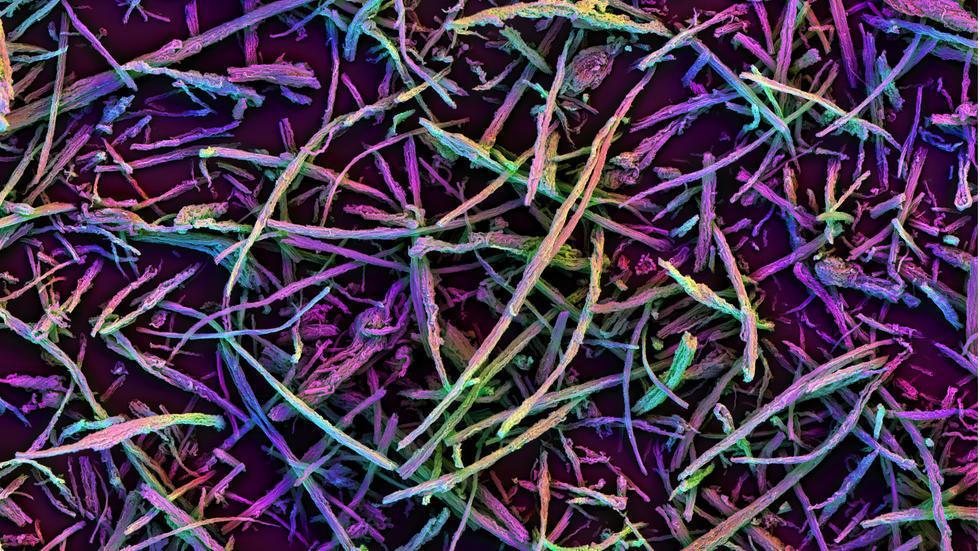
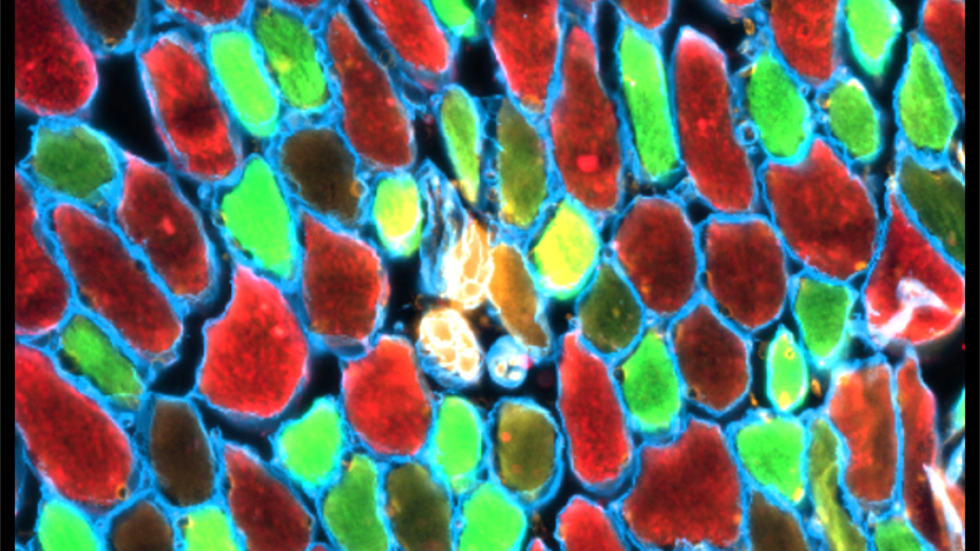
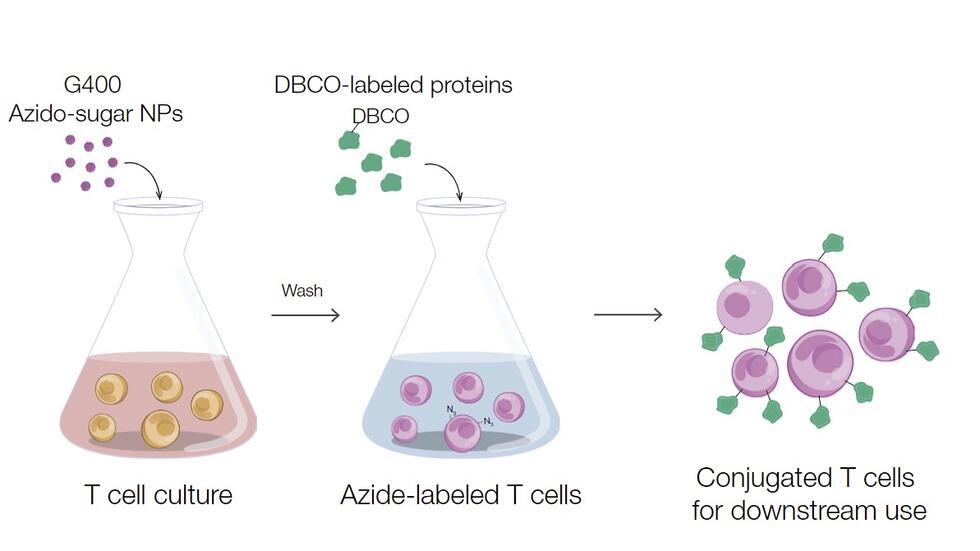
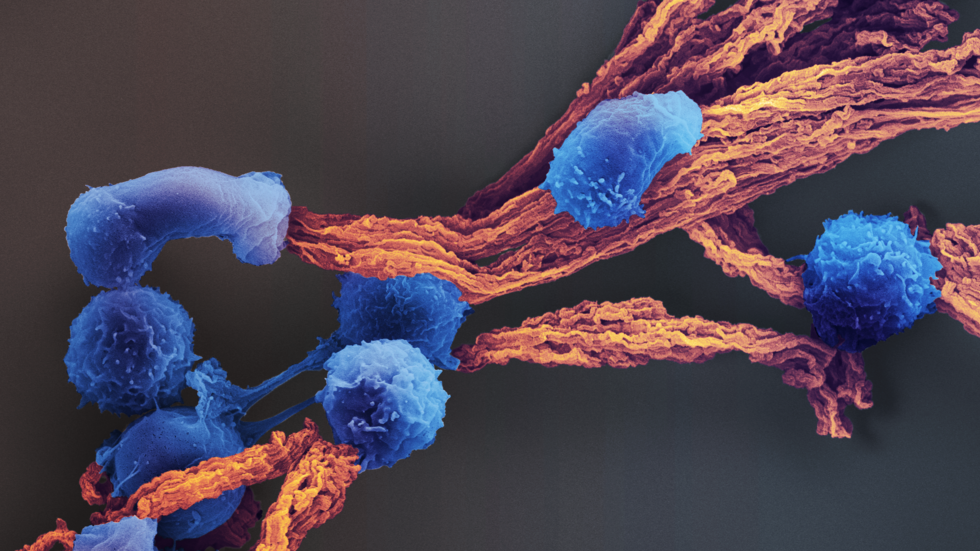
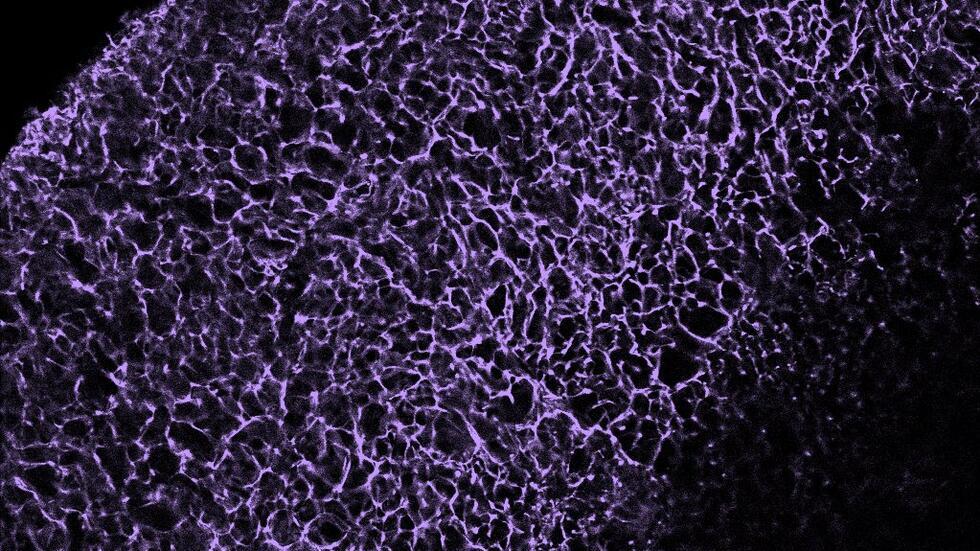
1. Neuromuscular junctions - Hannah Storrie; 2. Fluorescent endothelial sprouting assay - Eduardo Silva; 3. SEM microscopy - Claudia Fischbach; 4. Endothelial sprouting assay - Will Yuen; 5. Histology - Eduardo Silva; 6. Histology - Eduardo Silva; 7. Cells adhering to a surface - James Cunningham; 8. SEM microscopy - Claudia Fischbach;

Mechanotransduction

Mechanical signals regulate the development of a variety of tissues (e.g., blood vessels, bone, cartilage) in our bodies, and may play a role in various diseases as well. We hypothesize that mechanical signals will be critical to the development of engineered tissues as well, and will be required to achieve full function. This possibility is currently being studied in the lab at a variety of levels. At the most basic level, studies of how externally-applied mechanical signals are sensed by cells and are transferred intracellularly (mechanotransduction) are being performed with muscle and bone cells. The role of focal contacts, both as pathways for mechanical signal propagation, and as targets of the mechanical signal, are being studied. We are also studying the possibility that cytoskeletal assembly directly regulated by external mechanical signals, and the role of the cytoskeleton in translating the mechanical signal into changes in biochemical signaling pathways. At the tissue level, the response of three-dimensional engineered tissues to external mechanical loading is being delineated in a variety of in vitro model systems. Altogether, these studies will both define mechanisms by which external mechanical signals regulate gene expression, and lead to strategies to exploit these mechanisms in the context tissue engineering and regeneration.

back to top

Drug Delivery

Traditional drug delivery often relies on the single or repeated injection into the body of drug molecules. Proteins and other macromolecular drugs (e.g. DNA) are poor candidates for this type of delivery due to their rapid degradation in the body, and the need to have them act at specific anatomic sites. We are developing a variety of polymer systems for the localized and sustained delivery of both small and large drug molecules.

One focus of research is the development of systems for the combinatorial or sequential delivery of growth factors involved in new blood vessel formation (angiogenesis). Angiogenesis is required in the treatment of a variety of ischemic tissue diseases, and is a critical component of any effort to engineer a tissue of significant size. We have developed biodegradable scaffolds for the local delivery of specific growth factors for specific time frames at specific doses to enhance new blood vessel formation.

Polymer systems which allow for minimally invasive delivery (injectable systems), and implantable systems are being developed. Both systems are currently being tested in vitro and in small animal models for the delivery of both protein growth factors, and plasmid DNA encoding for the factors. These systems may also be useful for the localized delivery of small drug molecules (for example, chemotherapy agents at the site of a tumor).

back to top


New Biomaterials

The biomaterials which currently are utilized in the majority of tissue engineering approaches function to provide mechanical support and/or deliver cells to a desired anatomic site. However, they are not designed to specifically interact with desired cell populations and guide the resultant structure and function of engineered or regenerated tissues. We are designing biomaterials which provide several different types of information to cells in their environment, and thus mimic many functions of the native extracellular matrices found in tissues. This aspect of our work involves the design and synthesis of new polymers, the development of new processing approaches for existing polymers, and extensive physical and biological characterization of the resulting tissue engineering scaffolds.

A variety of types of information may be conveyed to cells from the biomaterial. The specific mechanism of cell adhesion to a material (e.g., specific ligand-cell receptor bonds) may be designed into a material to promote a specific pattern of gene expression in the adherent cells. Mechanical signals may be conveyed to the adherent cells via the biomaterial, and the specific receptors used to convey the mechanical signal may be varied to tune the cellular response to the mechanical signal. In addition, specific combinations or sequences of growth factors may be locally released from the biomaterials to affect local cell populations, and drive various processes such as migration or proliferation. Finally, we are investigating the utility of biomaterials for local gene therapy. Both biodegradable polymers and ceramic systems are being developed to test our ability to control local tissue formation with biomaterials.

back to top

Tissue Engineering

There is a tremendous medical need for new tissues and organs for people suffering from a variety of diseases and accidents. Our laboratory is developing new ways to grow, or engineer, new tissues and organs using biomaterials which serve to guide new tissue formation following placement in the body. We are taking a variety of approaches to achieve this goal , including transplanting cells, delivering proteins which make cells already in the body form new tissues, using gene therapy to grow tissues, and using the biomaterial by itself to drive regeneration. A common theme in all of these approaches is combining basic studies on the mechanisms by which cells interact with materials and synthesizing new polymers that mimic natural materials in the body.

We are currently attempting to engineer a variety of tissue types in the lab. These include bone, cartilage, smooth muscle, skeletal muscle, liver and other soft tissues. In addition, we have active collaborations to engineer intestinal tissue, salivary glands, and pancreas. A variety of in vitro three-dimensional culture systems and in vivo small animal models are utilized in our laboratories to engineer tissue.

back to top