

We use experiments, theory and computation to study motion and matter at the human scale. Areas of interest include the patterns of shape and flow of inanimate matter in systems ranging from the supramolecular to the planetary, and the dynamics of sentient matter that can self-organize, perceive and act in systems ranging from the sub-cellular to the super-organismal. Via answers to specific questions, we aim to get at general principles, if there be such, and get a qualitative understanding using quantitative methods – Soft Math !


A mechanochemical model recapitulates distinct vertebrate gastrulation modes. Mattia Serra, Guillermo Serrano Nájera, Manli Chuai, Alex M. Plum, Sreejith Santhosh, Vamsi Spandan, Cornelis J. Weijer and L. Mahadevan, Biophysics. Volume 9, Issue 49, 6 Dec 2023.
[PDF]
Abstract
Abstract

Learning to write with the fluid rope trick. Gaurav Chaudhary, Stephanie Christ, A. John Hart and L. Mahadevan, Soft Matter. 23 October 2023
[PDF]
Abstract
Abstract

Statics and diffusive dynamics of surfaces driven by p-atic topological defects. Farzan Vafa and L. Mahadevan, Soft Matter. 09 August 2023
[PDF]
Abstract
Abstract

Beak morphometry and morphogenesis across avian radiations. Salem Mosleh, Gary P. T. Choi, Grace M. Musser, Helen F. James, Arhat Abzhanov and L. Mahadevan, Royal Society. 18 August 2023
[PDF]
Abstract
Abstract

Contractility-Induced Phase Separation in Active Solids. Sifan Yin and L. Mahadevan, Volume 131, Iss. 14, 2 October 2023.
[PDF]
Abstract
Abstract

Evaporation-Driven Cellular Patterns in Confined Hyperelastic Hydrogels. Baudouin Saintyves, Romain Pic, L. Mahadevan and Irmgard Bischofberger, Volume. 131, Iss. 11, 15 September 2023.
[PDF]
Abstract
Abstract

You hear the musical saw. These mathematicians heard geometry.

Fired from brushing his daughter’s hair, a scientist uses math to detangle the problem

The physics of a singing saw

Tear-free brushing? All you need is math

Shape-Shifting Materials With Infinite Possibilities: Totimorphic Structural Materials Can Achieve Any Shape
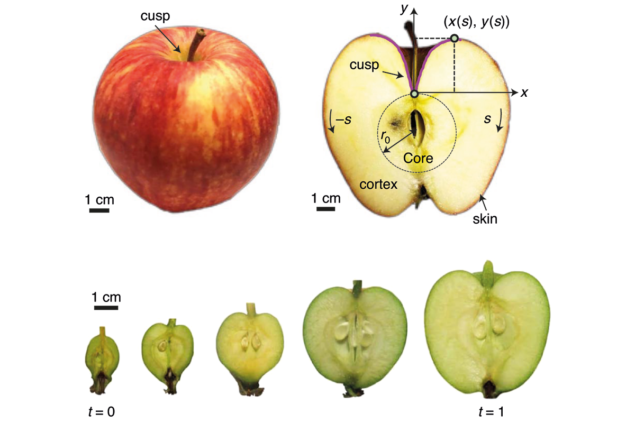
Physicists get under the skin of apple growth
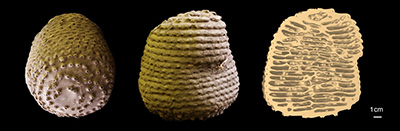
Constructing termite turrets without a blueprint
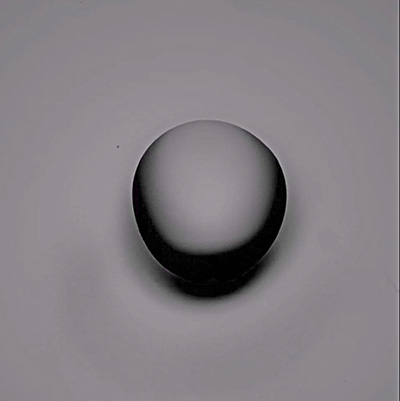
Self-excited dancing droplets

A Scientist Who Delights in the Mundane

Life from chaos

A better understanding of soft artificial muscles

Shape-shifting of things to come

Protein Clumping Best Blocked Using Specific Compounds at Distinct Disease Stages, Model Suggests

How early-stage embryos maintain their size
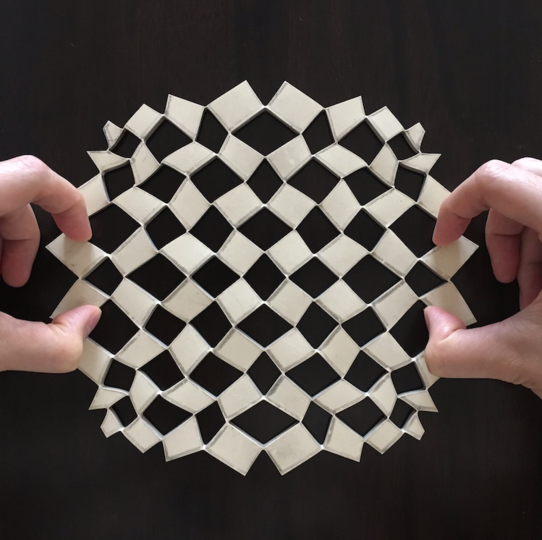
Cutting into shape

Using math to help treat Alzheimer’s, Parkinson’s and other diseases

Using origami memory to encode geometric information in floppy structures
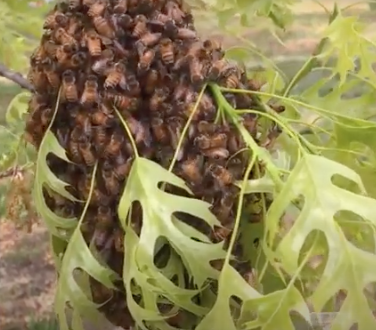
Shaking the swarm

 Prof. L. Mahadevan
The sublime in the mundane
“Vulgar and inactive minds confound familiarity with knowledge …. The scientist, who is not content with superficial views, harasses himself with fruitless curiosity; and still, as he inquires more, perceives only that he knows less. …” so wrote the English man of letters, Samuel Johnson nearly three centuries ago. Like the scientist, the minds of […]
Watching Paint Dry by L. Mahadevan, The Harvard Undergraduate Research Journal
Somewhat reversing the trend towards reductionism, over the last few decades there has been a growing appreciation of the richness and variety of phenomena that arise from relatively few and fairly simple causes in the natural world. There is mystery and magic in the mundane. And what is more—it can be experienced, every day, everywhere by everyone. It is also a gentle reminder that science can be an engaging and enriching cultural, and ultimately human activity, not always a means to an end.